


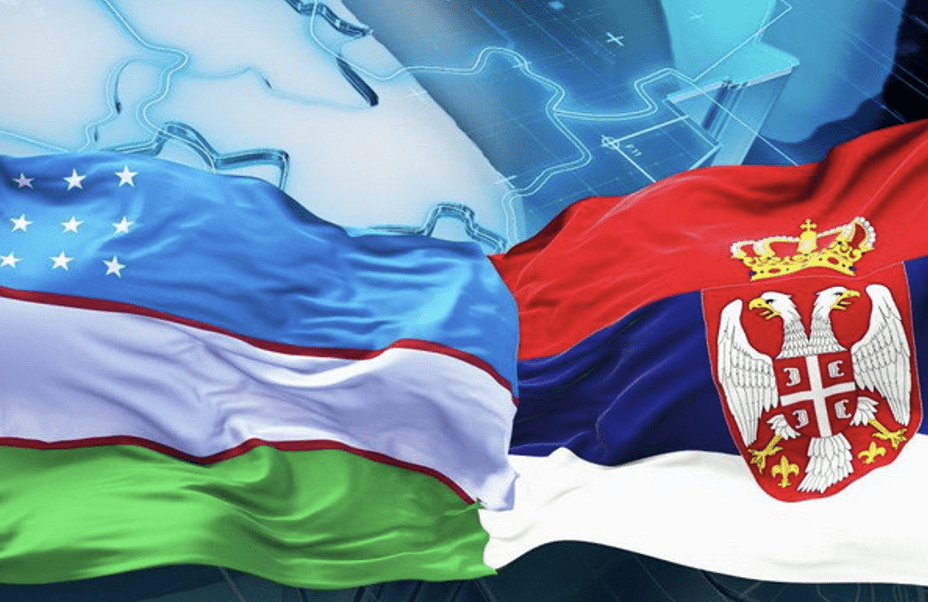
A deeper model is beginning to take shape in Uzbek-Serbian economic relations, based on companies’ mutual access to each other’s markets. The Uzbek side is exploring participation in infrastructure projects in Serbia, while Serbian partners are considering localization, contract manufacturing, and the placement of orders in Uzbekistan. In this way, trade relations are being complemented by investment and production projects capable of giving cooperation a more sustainable character.
The economic logic behind this rapprochement is largely determined by the
geographical position of the two countries. Serbia is in close proximity to the
major markets of Central and Southeastern Europe and benefits from an extensive
network of trade agreements. Uzbekistan is consistently expanding its
industrial base and deepening localization in Central Asia. This combination
creates favorable conditions for projects in which the partner’s market serves
as a platform for production and investment, followed by access to neighboring
markets.
Existing trade already outlines the sectoral foundation for cooperation.
Uzbekistan supplies Serbia with food, textile, and chemical products, while
Serbian exports include industrial equipment, machinery, metal products, and
other goods for production purposes. The greatest potential lies in segments
where supplies can be further developed through production specialization and
joint investment.
The development of transport connectivity between Central Asia and Europe is
increasing the importance of the Serbian route. Serbia is considered a
potential European link of the Middle Corridor, or Trans-Caspian International
Transport Route. Increasing the reliability and predictability of
transportation reduces logistical constraints for businesses and improves the
economics of projects targeting both Central Asian and European markets.
Against this background, cooperation in the railway sector is particularly
significant. The sides are exploring a joint project for the construction of
approximately 200 kilometers of railway infrastructure in Serbia. For
Uzbekistan, the significance of this initiative goes far beyond a single
infrastructure project. It provides an opportunity to bring to the European
market the expertise accumulated in railway construction, engineering, and the
implementation of major transport facilities. This expands the country’s export
potential through engineering and construction services and gives national
companies an opportunity to gain experience in implementing projects within the
European business and regulatory environment.
In industry, the transition to more sophisticated forms of cooperation is
taking place in several formats. In light industry, the placement of orders
from Serbian brands at existing Uzbek production facilities is being
considered. In pharmaceuticals, contract manufacturing of medicines in
cooperation with Hemofarm and Galenika is being explored, along with local
production in cooperation with the Torlak Institute. In mechanical engineering
and electrical engineering, the focus is on the localization of metal
components and the assembly of electric motors. This agenda is complemented by
initiatives in the chemical industry and small and medium-sized hydropower.
These formats reflect different levels of enterprise involvement in joint value
chains. The placement of orders makes it possible to utilize existing
production capacities and establish links with international brands. Contract
manufacturing raises requirements for technologies, standards, and quality
control. Component localization brings more complex operations into the country
and generates demand for local suppliers. In this way, commercial ties
gradually create a foundation for sustainable production specialization. The
mutually beneficial nature of cooperation is also evident in construction.
Alongside joint efforts to develop railway projects in Serbia, the involvement
of Serbian contractors in major urban development projects in Uzbekistan is
also being considered. Each side has the opportunity to apply its own
experience in the partner’s market and expand the geographical reach of its
national businesses.
At this stage, the institutional framework is of particular importance. The
agreements on the mutual promotion and protection of investments and on
economic cooperation that have entered into force provide a legal framework for
long-term investment and systematic sectoral cooperation. Their practical value
lies in supporting the initiatives already identified — from determining
participants and developing financing models to their direct implementation.
The contours of the next stage are therefore already sufficiently clear:
infrastructure services in the European market, the integration of Uzbek
enterprises into international production chains, the development of more
sophisticated technological operations within the country, and mutual
participation of businesses in major projects. This is creating a deeper structure
of relations in which trade is extended through investment and industrial
cooperation.
The key task now is to consistently transform the established portfolio of initiatives into operational projects. Their implementation will make it possible to turn the geographical position of the two countries into a practical economic resource: for Uzbekistan, to expand the activities of national businesses in the European market; and for Serbia, to develop a long-term presence in the industrial space of Central Asia.


