
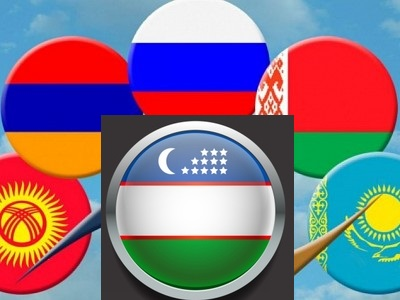
At the end of May, President of Uzbekistan Shavkat Mirziyoyev will take part in the upcoming summit of the Eurasian Economic Union (EAEU) in Astana.
In recent years, the participation of the President of Uzbekistan, Shavkat Mirziyoyev, in events of the Eurasian Economic Union has become an important element of the country’s foreign economic strategy, aimed at expanding practical cooperation, strengthening trade and economic ties, and developing sustainable mechanisms of regional interaction. Against the backdrop of global economic transformation, increasingly complex logistics routes, and growing competition for investment resources, the Eurasian direction is gaining particular importance for Uzbekistan.
As noted by the President of Uzbekistan during a meeting of the Supreme Eurasian Economic Council in 2025, “in the context of growing fragmentation of global markets, the increasing complexity of supply chains, and shifts in the allocation of investment resources, the deepening of pragmatic and mutually beneficial cooperation with the countries of the Eurasian Economic Union is of fundamental importance for us”. This position reflects Uzbekistan’s commitment to building sustainable and long-term economic ties across the Eurasian space.
The Eurasian Economic Union is one of the largest integration associations in the post-Soviet region, established on the basis of the Customs Union and the Common Economic Space. The Union began functioning on 1 January 2015, following the entry into force of the Treaty on the EAEU, signed by Belarus, Kazakhstan, and Russia, later joined by Armenia and Kyrgyzstan.
The modern stage of interaction between Uzbekistan and the Eurasian Economic Union dates back to 2019, when the Republic began a comprehensive review of expanding cooperation with the bloc. On 11 December 2020, Uzbekistan officially obtained observer status in the EAEU, enabling the country to participate in the meetings of the Union’s bodies, establish a structured dialogue with the Eurasian Economic Commission, and study the practical mechanisms of the integration association’s functioning.
Since then, cooperation between Uzbekistan and the EAEU has taken on a stable, systematic, and practice-oriented character. An interagency working group on cooperation with the Union was established, a mechanism of regular consultations with the Eurasian Economic Commission was put in place, and a Memorandum of Cooperation between the government of Uzbekistan and the EEC was signed. Subsequently, the parties moved on to the implementation of joint three-year cooperation plans covering trade, industry, transport, the financial sector, and digital technologies.
Uzbekistan’s participation in EAEU high-level events has also intensified. Since 2021, the President of Uzbekistan has regularly participated in meetings of the Supreme Eurasian Economic Council, while government representatives have taken part in the work of the Eurasian Intergovernmental Council. This demonstrates the progressive development of cooperation and the growing interest of both sides in expanding practical engagement.
In recent years, cooperation between Uzbekistan and the member states of the Eurasian Economic Union (EAEU) has demonstrated steady positive dynamics. The Eurasian space remains one of the most important directions of the Republic’s foreign trade. By the end of 2025, Uzbekistan’s trade turnover with EAEU countries exceeded USD 20 billion, while the share of the Union’s member states in the country’s total foreign trade reached almost one quarter of overall external trade turnover.
Uzbekistan is also participating in a number of sectoral initiatives and projects within the EAEU framework. These include the development of e-commerce, the digitalization of rail freight transportation, the implementation of the “Eurasian Agroexpress” project, and cooperation on the climate agenda. These areas contribute to reducing logistics costs, simplifying cross-border trade, and enhancing the connectivity of transport corridors across the Eurasian space.
At the current stage, cooperation between Uzbekistan and the Eurasian Economic Union is gradually moving to a qualitatively new level, encompassing not only trade and economic relations, but also digital transformation, technological cooperation, and the development of joint infrastructure. One of the key priorities is the removal of existing barriers and the creation of more efficient mechanisms for economic interaction.
An important component of the current stage of engagement is the development of digital integration. Uzbekistan is interested in the harmonization of digital platforms, the expansion of electronic commerce, and the introduction of modern data exchange mechanisms. Such an approach corresponds both to the goals of improving the efficiency of foreign trade and to the broader objective of building a modern and interconnected economic infrastructure across the Eurasian space.
Within a relatively short period of interaction in the status of an observer state, the parties have succeeded in establishing stable mechanisms of dialogue, expanding trade and economic ties, and moving toward the implementation of concrete sectoral and infrastructure projects.
For Uzbekistan, the Eurasian direction remains an important element of its strategy for economic modernization, industrial cooperation, and the strengthening of transport and logistics connectivity. At the same time, the Republic continues to adhere to a model of flexible and pragmatic participation in integration processes, guided primarily by national economic interests and the principle of mutual benefit.
In the context of the transformation of the global economy, intensifying competition for markets, and changing global logistics routes, cooperation with the EAEU is viewed by Tashkent as one of the instruments for ensuring sustainable economic growth, expanding export opportunities, and enhancing the competitiveness of the national economy. For this reason, Uzbekistan intends to further strengthen practical cooperation with the member states of the Eurasian Economic Union, develop new areas of collaboration, and maintain a constructive dialogue on key issues of regional development.
Dunyo IA


