

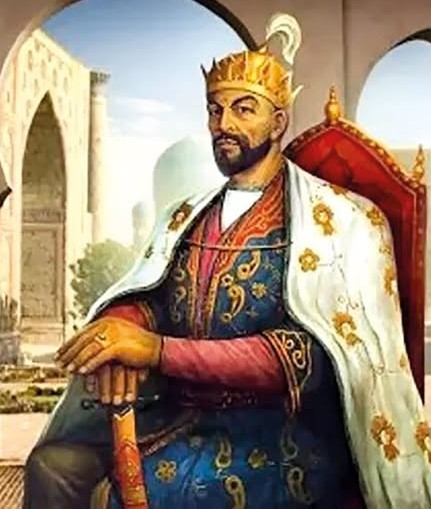
“The image of Sahibkiran Amir Temur,
having become a symbol of our
national statehood, continues to provide
immense spiritual strength to our people
in realizing our identity and restoring
our ancient traditions and values”,
Shavkat Mirziyoyev
An International Scientific and Practical Conference titled “The role and significance of the civilization of Amir Temur and the Timurids in world history and culture” was organized in the city of Tashkent to mark the 690th anniversary of the birth of Sahibkiran Amir Temur.
This prestigious forum was held at the Center of Islamic Civilization in Uzbekistan, established at the personal initiative of President Shavkat Mirziyoyev.
This international scientific and practical conference serves as a vital platform for scholarly dialogue, aimed at the profound study of national heritage and its extensive promotion on a global scale. It further seeks to re-evaluate the scientific and spiritual achievements of the Timurid era through the lens of modern science.
The conference was organized at the initiative of the Government of Uzbekistan, in cooperation with several ministries, agencies, research institutions, and international organizations. It featured the participation of prominent local and foreign scholars, historians, Orientalists, art historians, archaeologists and political scientists, alongside distinguished faculty members from prestigious universities.
OPENING CEREMONY
The solemn opening ceremony of the conference was organized at the highest level. It was attended by prominent state and public figures, leading scholars, representatives of international organizations and members of the diplomatic corps. In their addresses, the speakers specifically emphasized the persona of Amir Temur and his pivotal role in establishing traditions of statehood, justice and a strong centralized system of governance.
Furthermore, it was noted that science, culture, and art flourished during the Timurid era, and this legacy continues to serve the progress of world civilization to this day. The conference participants emphasized that such events are of paramount importance for comprehending historical heritage and transmitting it to future generations.
INTERNATIONAL PARTICIPATION
The conference featured leading scholars, historians, Orientalists, archaeologists and political scientists from numerous countries, including Türkiye, France, Italy, Germany, the United States, the United Kingdom, Russia, China, India, Iran, Kazakhstan and others, who engaged in an extensive exchange of scholarly perspectives.
In their reports, the participants presented the findings of scientific research on the history of the Timurid era, public administration, science, culture, architecture and international relations. Foreign experts placed particular emphasis on the global significance of this legacy and its role in the cultural dialogue between European and Asian civilizations.
KEY THEMES AND DISCUSSIONS
The following priority topics were extensively discussed during the conference:
- Amir Temur’s strategy in state administration and military art;
- The development of science and the education system during the Timurid era;
- The role of Samarkand and Herat in world civilization;
- Architectural and urban planning traditions of the Timurid period;
- Manuscripts, miniature art, and cultural heritage;
- International diplomacy and trade relations during the Timurid era;
- The study of the Timurid legacy in modern research.
- Additionally, the conference featured various thematic exhibitions, displays of rare manuscripts and specialized scholarly dialogues.
OBJECTIVES AND SIGNIFICANCE
The primary objective of the conference is to facilitate a comprehensive, evidence-based study of the legacy of Amir Temur and the Timurid era, to further elucidate its role in world civilization and to strengthen international scientific cooperation.
In addition to promoting historical heritage, this event served to educate the younger generation in the spirit of respect for national values, while stimulating scientific research and fostering the formation of new academic disciplines.
At the conclusion of the conference, a set of scientific findings, proposals, and recommendations was developed. It was emphasized that these results will serve as a vital strategic foundation for the future study and promotion of the Timurid legacy.


