
Historically, Central and South Asia constituted a macro-region of intensive cross-cultural and civilisational exchange.
The peoples of the two regions were repeatedly incorporated into common state formations and shared political, economic, cultural and humanitarian spaces. It was through these territories that major routes passed, connecting the Middle East, Europe, India and China. Close contacts facilitated the dissemination of scientific knowledge and philosophical ideas, as well as achievements in medicine, astronomy, mathematics, architecture, diplomacy and systems of public administration.
In contemporary conditions of global turbulence and a deficit of mutual trust, understanding the deep historical and civilisational commonality of Central and South Asia is of particular importance. This is not only a matter of retrospectively analysing trade ties or political contacts of the past. Data from modern population genetics confirm the existence of stable, centuries-long anthropological interconnections among the population of the macro-region.
The results of large-scale palaeogenetic studies, including the sequencing of ancient DNA (aDNA) from representatives of the Indus civilisation, together with archaeological and linguistic evidence, make it possible to reconstruct the directions of migration flows and the transformation of the gene pool over millennia.
Studies of the ancient population of southern Uzbekistan and of the Bactria-Margiana Archaeological Complex (BMAC) demonstrate the genetic continuity of local populations and their close contacts with ancient communities of the Iranian Plateau, north-western India and the Indus basin.
The specific nature of these processes in the Late Bronze Age and the Early Iron Age indicates that the territories of present-day southern Uzbekistan functioned as a space of permanent demographic and cultural exchange. They formed part of a single area of intensive circulation of people, technologies and cultural practices. This factor shaped the closeness of anthropological, linguistic and religious processes in Central and South Asia without erasing their autochthonous identities.
This is not a question of genetic homogeneity, but of a centuries-old system of demographic interactions that shaped the closeness of anthropological, linguistic, cultural and religious processes in Central and South Asia.
In this context, Uzbekistan attaches special importance to the restoration of deep historical and cultural relations in order to create a solid foundation for enhancing connectivity. After 2016, the country’s modern foreign policy is based on the synergy of pragmatic economic and transport partnership and the recognition of the common historical destiny of the macroregion.
At the same time, within the framework of the “Termez Dialogue”, projects are being formed for the joint study of Buddhist and Islamic heritage. The exceptional syncretism of the monuments of southern Uzbekistan (Kara-Tepe, Fayaz-Tepe and Kampyrtepa) reflects the historical synthesis of Indian, Hellenistic, Iranian and Central Asian traditions, marking the routes of the transfer of Buddhism from India to East Asia.
A new stage of civilisational synthesis is associated with the integration of the region into the Islamic space from the eighth century onward. Termez became one of the key intellectual centres of the Muslim world, as evidenced by the influence of Sufi networks and the legacy of the outstanding thinker al-Hakim at-Termizi, whose works retain authority in both Central and South Asia. In the Timurid era, these ties served as a basis for the formation of the unique Indo-Muslim civilisation of the Great Mughals, whose origins directly go back to the cultural matrix of Mawarannahr.
Relying on this historical and civilisational foundation, Tashkent today advocates the creation of a common cultural and humanitarian platform for Central and South Asia, one that demonstrates a high degree of complementarity with the foreign policy strategies of key South Asian states.
India: New Delhi views Uzbekistan’s initiatives through the prism of its own Connect Central Asia concept. Cultural and historical parallels (the Baburid era, Sufism and Buddhist heritage) enable India to expand its humanitarian presence in the region, as reflected, in particular, in the opening of branches of leading Indian universities (Amity and Sharda) in Uzbekistan.
Pakistan: For Islamabad, deep spiritual ties with Samarkand and Bukhara are critically important. The development of programmes of “ziyarat tourism” (pilgrimage tourism) acts as a catalyst for humanitarian contacts and contributes to the growth of mutual trust necessary for implementing large-scale trans-regional transport projects.
Afghanistan: For Kabul, Uzbekistan’s depoliticised initiatives open a legitimate channel of interaction with the outside world, allowing the country to integrate into regional economic processes without being drawn into political confrontation.
The strategic potential of the macro-region is closely linked to its demographic characteristics. Central and South Asia are among the youngest regions in the world: the share of the population under 30 exceeds 60 per cent, while the median age is about 28. This demographic resource serves as a key driver of sustainable growth and the activation of intersocietal ties, which makes the development of human capital particularly urgent.
In these conditions, joint work in the field of human capital development becomes increasingly important. This includes the training of qualified personnel, the expansion of scientific and academic cooperation, the exchange of knowledge and technologies, and the intensification of youth and public contacts.
Uzbekistan is consistently scaling up inter-university and scientific and academic cooperation in the macro-region. A practical example of this activity is Termez, where programmes of vocational and language training for Afghan students have been launched with the support of international organisations. As a result, the city is being transformed into a major educational and humanitarian hub at the junction of the two regions.
In this context, Tashkent’s modern initiatives aimed at restoring trans-regional connectivity appear as a natural continuation of a historical model of development determined by the deep interdependence of states.
The contemporary foreign policy course of Uzbekistan is based on the synergy of pragmatic economic and transport partnership and the recognition of the macro-region’s shared historical destiny. In implementing this strategy, Termez, an ancient intellectual and logistical hub linking Mawarannahr, Afghanistan and the Indian subcontinent, acquires special significance.
Its historical role was shaped by a unique geostrategic position. Already in antiquity, Termez was an important centre of the Greco-Bactrian and Kushan worlds. It was the Kushan Empire that created one of the first stable political and economic spaces uniting the territories of present-day Central Asia, Afghanistan, Pakistan and northern India.
Today, Uzbekistan is institutionalising this heritage by creating new multilateral dialogue platforms. The key element of this architecture is the international platform “Termez Dialogue”, which is focused on developing transport and logistical connectivity, humanitarian diplomacy and academic interaction.
The expert community notes the qualitative evolution of this platform. The second session of the “Termez Dialogue”, scheduled for 4–6 June 2026 in Tashkent, Termez and Samarkand, marks a transition from conceptual discussions to the formation of applied mechanisms of cooperation in politics, logistics, climate adaptation and cultural exchange. The forum is acquiring the status of a specialised international platform for developing multilateral approaches to regional security and the Afghan settlement process.
The fundamental distinction of Uzbekistan’s approach lies in its reliance on the concept of “inclusive regionality”, which presupposes the obligatory inclusion of Afghanistan in the system of trans-regional ties. Tashkent proposes an alternative model of diplomacy, viewing humanitarian cooperation as an instrument for reducing interstate contradictions and overcoming regional fragmentation.
Thus, contemporary Uzbekistan is carrying out a conceptual rethinking of the historical experience of interaction between Central and South Asia in relation to the realities of the twenty-first century. By developing the “Termez Dialogue” platform and stimulating trans-regional connectivity, Tashkent is transforming historical memory of a single civilisational space into a viable mechanism of multilateral integration, humanitarian partnership and indivisible regional security.
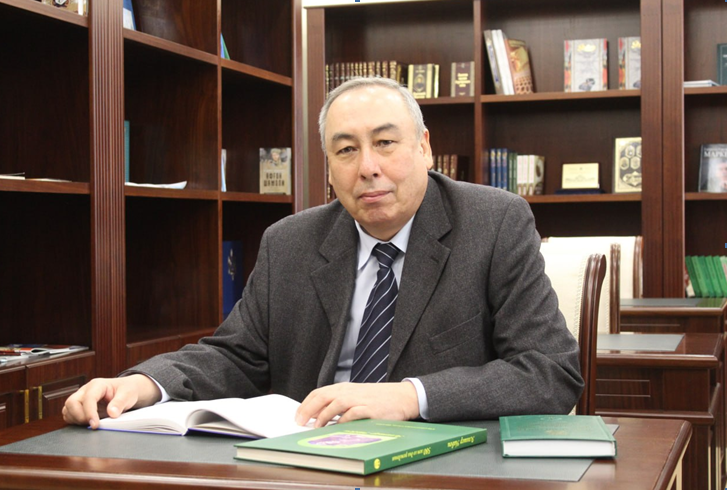
Alisher Sabirov
Doctor of Historical Sciences
Nizami National Pedagogical University
of Uzbekistan


